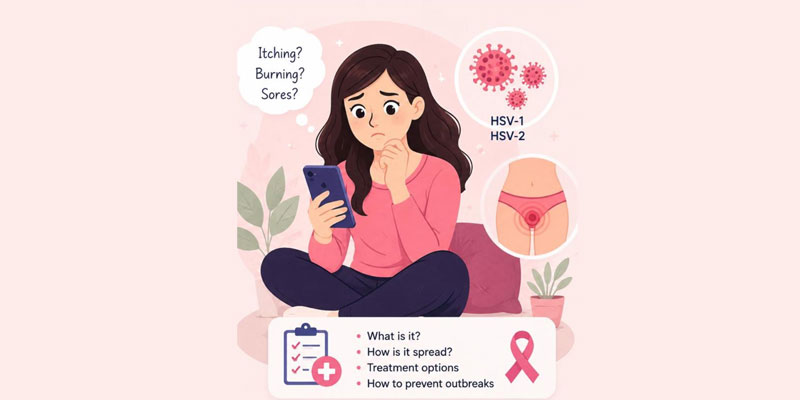
Genital Herpes in Women: Symptoms, Treatment & Pregnancy Considerations
Genital herpes is a common sexually transmitted infection caused by the herpes simplex virus (HSV). It can cause painful blisters or sores around the genital area, though some women may have very mild symptoms or none at all.
While the infection can be managed effectively with treatment, it becomes especially important to diagnose and monitor during pregnancy to ensure the safety of both mother and baby.
What Causes Genital Herpes?
Genital herpes is caused by the herpes simplex virus, most commonly HSV-2, though HSV-1 may also sometimes be responsible.
It usually spreads through sexual contact including vaginal, oral, or anal intercourse.
What Are the Symptoms of Genital Herpes?
Symptoms can vary from person to person, but commonly include:
- Painful blisters or ulcers around the vaginal/genital area
- Burning, itching, or irritation in the private parts
- Pain while passing urine
- Tingling or discomfort before sores appear
- Fever, body ache, or swollen glands during the first outbreak
Some women may carry the infection without developing obvious symptoms.
Can Genital Herpes Be Mistaken for Something Else?
Yes. Many women initially confuse herpes lesions with:
- Pimples or boils
- Ingrown hair
- Fungal infection
- Skin allergy or rashes
- Small cuts after shaving or waxing
This is why self-diagnosis is often difficult, and proper medical examination is recommended.
Is Genital Herpes Curable?
Genital herpes does not have a permanent cure, as the virus remains in the body even after symptoms improve.
However, it can usually be controlled very effectively with medications and lifestyle precautions.
How Is Genital Herpes Treated?
Treatment usually involves antiviral medications which help:
- Reduce pain and discomfort
- Speed up healing of sores
- Shorten the duration of outbreaks
- Lower chances of recurrence and spread
It is important to take medicines only under medical guidance.
Can Herpes Come Back Again After Treatment?
Yes, herpes can recur in some women because the virus stays dormant in the body.
Repeat episodes may be triggered by:
- Stress
- Illness or low immunity
- Fatigue or lack of sleep
- Menstruation
- Friction during intercourse
Recurrent episodes are often milder than the first attack.
Can Genital Herpes Affect Fertility?
No, genital herpes generally does not affect fertility or reduce a woman’s ability to conceive.
Genital Herpes During Pregnancy
Genital herpes needs special attention during pregnancy, particularly if infection occurs for the first time while pregnant.
If active sores are present near the time of delivery, there may be a risk of passing the infection to the baby during childbirth.
However, with proper monitoring and treatment, most women with herpes go on to have healthy pregnancies and babies.
Will I Need a C-Section If I Have Herpes?
Not always. A cesarean delivery may be advised only if active genital sores or symptoms are present at the time of labor to reduce the baby’s exposure to infection.
How Can You Prevent Spreading It to Your Partner?
- Avoid intercourse during active outbreaks
- Use protection during sexual activity
- Take suppressive medication if prescribed
- Maintain open communication with your partner
How Long Do Herpes Outbreaks Last?
A typical herpes outbreak usually lasts around 2–4 weeks during the first episode, while recurrent outbreaks are often shorter and may settle within a few days to 1–2 weeks.
Duration can vary depending on severity and whether treatment is started early.
Can Genital Herpes Spread Even Without Symptoms?
Yes. Herpes can sometimes spread even when no visible sores or symptoms are present.
This is called asymptomatic viral shedding, where the virus may be present on the skin without causing noticeable signs.
How Is Genital Herpes Transmitted?
Genital herpes spreads mainly through skin-to-skin sexual contact, including vaginal, oral, or anal intercourse.
It can spread through contact with herpes sores, infected skin, or even from skin that appears normal in some cases.
Can You Get Herpes From a Toilet Seat?
No. Herpes is not spread through toilet seats, swimming pools, towels, or casual daily contact.
The virus does not survive well on surfaces and typically requires direct skin-to-skin contact for transmission.
Can Cold Sores Cause Genital Herpes?
Yes. If a partner has oral herpes/cold sores and performs oral sex, the virus can spread to the genital area and cause genital herpes.
How Is Genital Herpes Tested?
Diagnosis may be made by clinical examination, but confirmation can be done through:
- Swab testing from an active sore or blister
- Blood tests in selected cases
Your doctor will advise the most suitable test depending on symptoms and timing.
How Can I Manage Symptoms at Home?
Along with medicines prescribed by your doctor, symptoms may improve with:
- Keeping the area clean and dry
- Wearing loose cotton underwear
- Avoiding friction or irritation over sores
- Staying well hydrated
- Avoiding sexual activity during outbreaks
Can I Contract Herpes From an Asymptomatic Partner?
Yes, this is possible. A person may carry and spread herpes without ever having obvious symptoms.
Many people are unaware they have the infection because symptoms may be absent, very mild, or mistaken for another condition.
What Are the Symptoms of Herpes in Male Partners?
- Blisters or ulcers over the penis, scrotum, or surrounding area
- Burning or itching in the genital region
- Pain during urination
- Tingling before lesions appear
However, many infected men may remain asymptomatic.
Does an Asymptomatic Male Partner Need Treatment?
Not always. Routine treatment may not be necessary if the partner has no symptoms, but medical evaluation is advisable.
In some situations, testing, counselling, or preventive treatment may be recommended based on the couple’s history.
Do I Need Lifelong Medication for Herpes?
No, not everyone requires lifelong medication.
Many women only need treatment during outbreaks. Long-term suppressive therapy is usually considered only in selected cases such as very frequent recurrences.
Can Herpes Cause Symptoms in Other Parts of the Body?
Especially during the first episode, some women may experience:
- Fever
- Body aches
- Headache
- Swollen lymph nodes
- General weakness or fatigue
What Is the Incubation Period of Herpes?
Symptoms generally appear within 2–12 days after exposure, though in some people the virus may stay silent much longer before causing the first noticeable outbreak.
How Does Pregnancy Affect Herpes?
Pregnancy itself does not always worsen herpes, but hormonal and immune changes may sometimes trigger outbreaks in susceptible women.
The main concern is careful monitoring near delivery.
Are Herpes Medications Safe in Pregnancy and Breastfeeding?
Common antiviral medicines used for herpes are generally considered safe in pregnancy and breastfeeding when prescribed by your doctor.
- Take medicines only as advised
- Inform your doctor if breastfeeding
- Avoid direct contact of the baby with any active breast lesions
How Did I Get Herpes in Pregnancy Without Symptoms Earlier?
Herpes can remain silent in the body for months or even years before causing symptoms.
It is possible that one partner had an old infection without knowing, and symptoms appeared later due to triggers such as stress, immunity changes, or pregnancy-related hormonal shifts.
A new diagnosis does not necessarily mean recent infection or infidelity.
What Is HSV-1 and HSV-2?
- HSV-1 → commonly causes oral herpes (cold sores around the mouth), but may also affect the genital area
- HSV-2 → more commonly causes genital herpes
Both types can infect either area depending on the type of contact.
Is Genital Herpes Related to Herpes Zoster (Shingles)?
No, they are different infections.
- Genital herpes is caused by the herpes simplex virus (HSV)
- Herpes zoster (shingles) is caused by the varicella-zoster virus
Having had shingles or chickenpox in the past does not mean you will develop genital herpes later.
Genital herpes is common, manageable, and nothing to panic about. With timely diagnosis and proper treatment, most women can control symptoms effectively and continue to have healthy relationships, pregnancies, and quality of life.