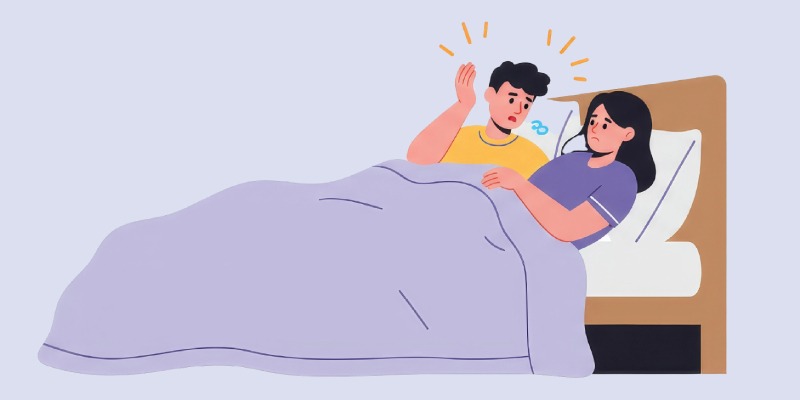
Painful sex, medically called dyspareunia, is a common but often unspoken problem among women. Many women feel embarrassed, confused, or worried that pain during intercourse is “normal” or “all in the mind.”
It is not. Painful sex always has a cause — and it is treatable.
This article explains:
- What dyspareunia is
- Common causes of painful sex
- The difference between vaginismus and vulvodynia
- How these conditions are diagnosed
- Available treatment options
- Which doctor to consult
What Is Dyspareunia?
Dyspareunia means persistent or recurrent pain during sexual intercourse. The pain may occur:
- At the entry of the vagina
- Deep inside during penetration
- Before, during, or after sex
Pain can feel like:
- Burning
- Stinging
- Tightness
- Sharp or stabbing pain
- Severe discomfort preventing penetration
Common Causes of Painful Sex
Painful sex can be caused by physical, hormonal, neurological, or psychological factors.
Common causes include:
- Vaginal infections (yeast, bacterial vaginosis, STIs)
- Vaginal dryness (especially during breastfeeding or menopause)
- Pelvic inflammatory disease (PID)
- Endometriosis
- Vulvar skin conditions
- Pelvic floor muscle spasm
- Anxiety or fear related to sex
- Past trauma or negative sexual experiences
Two very commonly confused causes are vaginismus and vulvodynia.
Vaginismus vs Vulvodynia: What’s the Difference?
What Is Vaginismus?
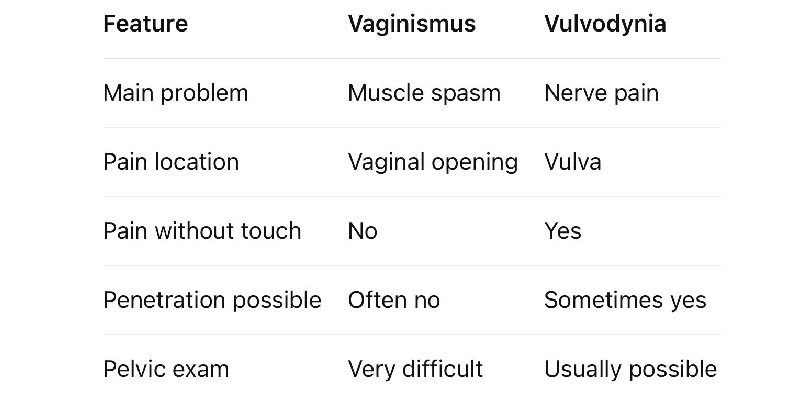
Vaginismus is a condition where the pelvic floor muscles involuntarily tighten when penetration is attempted.
Key features of vaginismus:
- Penetration is very painful or impossible
- Pain is mainly at vaginal entry
- Tightening happens involuntarily
- Often associated with fear, anxiety, or anticipation of pain
- Can occur even during tampon insertion or pelvic examination
👉 Important: The woman does not consciously cause the muscle tightening.
What Is Vulvodynia?
Vulvodynia is chronic pain of the vulva (external genital area) without an obvious cause.
Key features of vulvodynia:
- Burning, raw, or stinging pain
- Pain may be constant or triggered by touch
- Pain is present even without penetration
- Normal-looking vulva on examination
- Caused by nerve sensitisation or inflammation
Quick Comparison Table
What Causes Vulvodynia and Vaginismus?
Causes of Vulvodynia
Vulvodynia happens when the nerves of the vulva (outer genital area) become overly sensitive. Even light touch can be felt as pain.
This may be triggered by:
- Repeated vaginal infections in the past
- Previous inflammation or irritation of the vulvar skin
- Hormonal changes (such as after childbirth, during breastfeeding, or with some contraceptive pills)
- Long-term use of harsh soaps, intimate washes, or tight clothing
- Increased nerve sensitivity (nerves send pain signals even when there is no injury)
👉 In vulvodynia, the vulva may look completely normal, but the pain is very real.
Causes of Vaginismus
Vaginismus happens when the muscles around the vagina tighten automatically whenever penetration is attempted. This tightening is not intentional.
Common reasons include:
- Fear of pain during intercourse
- A painful first sexual experience
- Anxiety related to sex or pelvic examinations
- Past infections or medical procedures that caused pain
- Emotional stress or previous trauma
Over time, the body learns to tighten these muscles as a protective response, even when the woman wants penetration to happen.
An Important Point to Understand
Sometimes, both conditions exist together.
Pain from vulvodynia can lead to fear of penetration, which then causes vaginismus. Likewise, muscle tightness from vaginismus can increase vulvar pain.
How Is Painful Sex Diagnosed?
Diagnosis begins with a sensitive, respectful consultation.
Diagnosis may include:
- Detailed medical and sexual history
- Gentle pelvic examination (only if tolerable)
- Cotton swab test (for vulvodynia)
- Pelvic floor muscle assessment
- Hormonal evaluation if needed
- Screening for infections
⚠️ A painful examination should never be forced.
Treatment of Painful Sex
Treatment depends on the cause. Most women need a combination approach.
Treatment of Vaginismus
1. Pelvic Floor Physiotherapy
- Relaxation and control of pelvic muscles
- Biofeedback and guided exercises
- Core treatment for vaginismus
2. Vaginal Dilator Therapy
- Gradual, step-by-step desensitisation
- Done under guidance, never forced
3. Psychological Therapy (if needed)
- Cognitive Behavioural Therapy (CBT)
- Addresses fear, anxiety, or trauma
4. Education & Partner Involvement
- Understanding anatomy reduces fear
- Partner support improves outcomes
Treatment of Vulvodynia
1. Vulvar Care Measures
- Avoid soaps, perfumes, tight clothing
- Use cotton underwear
- Gentle hygiene only
2. Topical Medications
- Local anaesthetics gel
- Hormonal (Estrogen) creams
3. Oral Neuromodulators (used for nerve pain)
(Started at low dose and titrated)
4. Pelvic Floor Therapy
Helpful when muscle tension coexists
Who Should Treat Painful Sex?
Painful sex is best treated by a multidisciplinary approach.
Specialists involved:
- Gynaecologist – primary diagnosis and medical treatment
- Pelvic floor physiotherapist – muscle-related causes
- Psychologist/sex therapist – fear, anxiety, trauma
- Pain specialist – refractory nerve pain
👉 It is not “only psychological” and not “only physical.”
When Should You See a Doctor?
You should seek help if:
- Pain occurs repeatedly
- Penetration is not possible
- Pain is affecting relationships or mental health
- You are avoiding intimacy due to fear of pain
Early treatment leads to faster and better recovery.
Key Takeaway
Painful sex is common, real, and treatable. Understanding the difference between vaginismus and vulvodynia is crucial for correct treatment. With proper care, most women experience significant improvement and pain-free intimacy.
📍 Source: Dr. Shweta Mehta — DNB Obstetrics & Gynaecology | United Multispeciality Hospital, Kandivali West, Mumbai