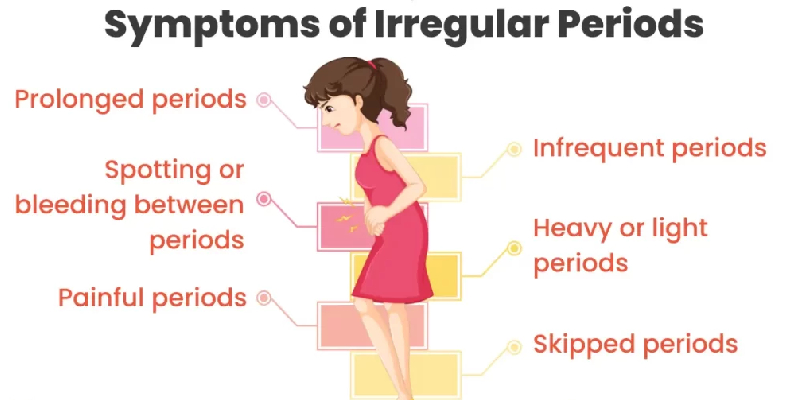
When a girl gets her first period (menarche), it is common for parents to worry if the cycles are irregular or the bleeding seems heavy.
The good news is — most menstrual irregularity in the first few years is normal as the body adjusts to hormonal changes of puberty.
Let’s first understand what a normal cycle looks like in teenage years before discussing when to be concerned.
What Is a Normal Period Pattern After Menarche?
In the first 1–2 years after the first period, the body is still learning to balance hormones.
- Cycle length between 21 to 45 days
- Bleeding lasting 3 to 7 days
- Mild variation in dates every month
- Some months heavier, some lighter
- Occasional missed period
This happens because ovulation (process that releases the egg in females) may not occur regularly at first — and that’s completely normal in puberty.
Why Do Periods Remain Irregular Initially?
During adolescence:
- Brain and ovaries are still coordinating hormone signals
- Estrogen and progesterone fluctuate
- Ovulation is inconsistent
This hormonal immaturity causes:
- Irregular cycles
- Variable flow
- Occasional heavy bleeding
With time (usually by 2–3 years), cycles become regular naturally.
When Are Irregular Periods a Problem?
Irregularity should be checked if:
- Bleeding lasts more than 7 days regularly
- Periods are extremely heavy (soaking pad every 1–2 hours)
- Gaps longer than 2–3 months repeatedly
- Severe weakness, dizziness or pallor (signs of anemia)
- Periods start very early (<9 years) or don’t start by 15 years
In these cases, medical evaluation is important.
How Long Does It Take for Periods to Become Regular After Menarche?
For most girls, periods gradually become regular within:
1 to 3 years after the first period
Some girls regularise within 6–12 months, while others take longer — both can be normal if overall health is good and bleeding is not excessive.
Though it may take even upto 6yrs in some, a medical check is advised after 3yrs of irregular cycles to rule out any major hormonal issue
Can Stress and Sleep Pattern Affect Periods in Teenagers?
Yes — very commonly.
- Emotional stress
- Exam pressure
- Anxiety
- Poor sleep habits
- Excess screen time at night
These can cause delayed periods, missed cycles, or heavier or lighter flow.
Good sleep (7–9 hours) and stress management can naturally improve cycle regularity.
Tips for Managing Irregular Periods Naturally (Teen Friendly)
- Maintain a regular sleep routine
- Eat balanced meals (don’t skip meals)
- Stay physically active (walking, sports, yoga)
- Drink enough water
- Manage stress with relaxation techniques
- Avoid crash dieting
What Is Puberty Menorrhagia?
Puberty menorrhagia means excessively heavy menstrual bleeding in teenage girls soon after menarche.
It is usually due to:
- Hormonal imbalance
- Irregular ovulation
- Immature blood vessel control in uterus
Most cases are not dangerous, but heavy blood loss can lead to anemia, fatigue, poor concentration, and reduced growth & health.
How Heavy Is Too Heavy Bleeding?
- Soaking 1 pad every hour for several hours
- Passing large clots frequently
- Bleeding more than 7–8 days
- Feeling weak or breathless
This needs medical advice.
Common Causes of Puberty Menorrhagia
- Hormonal imbalance (most frequent)
- Thyroid disorders
- Bleeding disorders
- Severe anemia
- Polycystic ovarian tendencies (later teens)
How Is It Treated?
- Iron supplements
- Hormonal regulation if needed
- Diet improvement
- Treatment of underlying problems
Most girls improve beautifully with proper care.
Diet Tips for Teens With Heavy or Irregular Periods
- Green leafy vegetables (spinach, methi)
- Fruits like pomegranate, apple, dates
- Eggs, dal, beans
- Nuts & seeds
- Milk & curd
- Iron-rich foods
Limit junk food, sugary drinks, excess fried food, and avoid skipping meals.
Vitamin C rich foods help iron absorption.
Frequently Asked Questions
Q1. Can irregular periods in teens affect future fertility?
No — irregular cycles in early puberty usually settle naturally and do not affect future fertility.
Q2. Is heavy bleeding at first period always dangerous?
Not always — but very heavy or prolonged bleeding should be checked to prevent anemia.
Q3. Should hormonal treatment be avoided in teenagers?
Though not always necessary short-term hormonal treatment is safe when prescribed by a doctor and often helps regulate cycles and control heavy bleeding.
Q4. Can poor diet cause irregular periods in adolescents?
Yes — low nutrition and anemia can disturb hormones and worsen bleeding problems.
Q5. Is it normal to skip periods during exams or stress?
Yes — stress commonly delays periods temporarily.
Q6. When should parents take their daughter to a gynecologist?
If bleeding is excessive, cycles are very irregular, anemia symptoms appear, or periods don’t regularise after a few years.
Irregular periods in early years are usually normal.
Heavy bleeding should not be ignored.
Early treatment prevents anemia and weakness.
Most teenage menstrual problems settle with time.
Periods After Menarche – What’s Normal & When to Worry
| Normal |
Concerning |
| Cycle every 21–45 days |
Cycles <20 or >60 days often |
| Bleeding 3–7 days |
Bleeding >7–8 days |
| Moderate flow |
Very heavy (pad hourly) |
| Small clots occasionally |
Large clots frequently |
| Feels well |
Weakness, dizziness |