Foods to Avoid During Pregnancy in India (2026): What’s Actually Unsafe vs Pregnancy Food Myths
Pregnancy comes with a long list of food-related advice — “Don’t eat papaya,”
“avoid pineapple,” “no coffee,” “don’t have sesame,” “street food is completely unsafe,”
and sometimes even a list of foods that supposedly cause miscarriage.
But how much of this is actually true?
This guide explains what pregnant women in India should actually avoid,
what should be limited, and what is generally safe.
1. Raw or Undercooked Eggs
Raw or undercooked eggs can carry Salmonella, which can cause significant food poisoning.
During pregnancy, eggs should be thoroughly cooked.
Be careful with:
- Half-boiled eggs
- Runny omelettes
- Soft scrambled eggs
- Homemade mayonnaise containing raw egg
- Desserts containing uncooked egg
Eggs in cakes and biscuits?
Properly baked eggs are generally safe during pregnancy.
Eggs provide protein, choline and several micronutrients.
2. Raw or Undercooked Meat
Avoid raw and inadequately cooked meat during pregnancy.
This includes:
- Undercooked chicken
- Rare or undercooked mutton
- Raw meat preparations
- Meat that remains pink or raw in the centre
- Raw or undercooked kebabs
The main concern is microbial contamination caused by inadequate cooking.
3. Raw or Undercooked Fish and Seafood
Avoid raw and undercooked fish and seafood during pregnancy, including
sushi with raw fish, sashimi, raw shellfish and undercooked prawns and oysters,
because of the risk of infections and parasites.
Cooked fish is healthy during pregnancy and provides protein and omega-3 fatty acids.
Choose low-mercury varieties and ensure they are thoroughly cooked.
4. High-Mercury Fish
Some large predatory fish contain high levels of methylmercury,
which can affect the developing nervous system.
During pregnancy, choose low-mercury fish such as:
- Salmon
- Sardines
- Rohu
- Catla in appropriate amounts
Properly cooked, low-mercury fish provides valuable protein and omega-3 fatty acids.
5. Unpasteurised Milk and Dairy Products
Unpasteurised milk can contain Listeria and other harmful bacteria,
so choose pasteurised milk and dairy products during pregnancy.
What about paneer?
Freshly prepared paneer made from pasteurised milk and handled hygienically
is generally safe.
6. Street Food: Is It Completely Banned?
No. Street food is not automatically banned during pregnancy.
The main concerns are hygiene, contaminated water, poor storage and inadequate cooking.
Be cautious with:
- Pani puri and chaat
- Cut fruits and raw salads
- Fresh juices with questionable water or ice
- Chutneys kept at room temperature
- Food left exposed or unrefrigerated for long periods
These foods can carry infections such as Salmonella, E. coli and Hepatitis A.
💡 Simple Rule:
Choose hot, freshly cooked food from a clean and reliable place rather than
raw or exposed food.
7. Raw Sprouts
Raw sprouts can harbour harmful bacteria because of the warm, moist conditions
in which they grow.
Be cautious with:
- Raw moong or bean sprouts
- Raw sprout salads
8. Unwashed Fruits and Vegetables
The concern is contamination, so wash fruits and vegetables thoroughly before eating.
Be particularly cautious with:
- Pre-cut fruits
- Fruit salads prepared outside
- Raw vegetables from unhygienic sources
- Unwashed leafy vegetables
You don’t need to avoid a fruit simply because it is considered “heaty.”
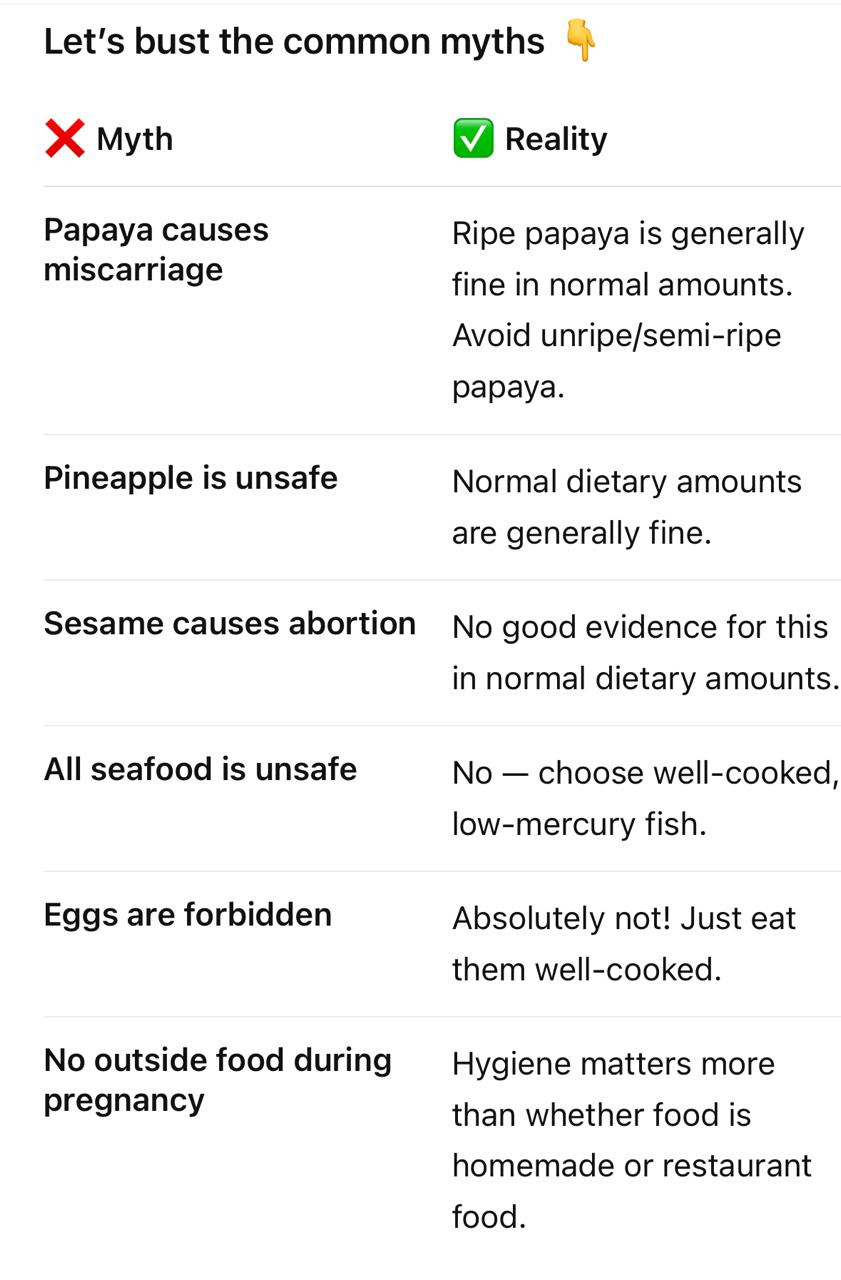
9. Papaya: Can You Eat It During Pregnancy?
Ripe papaya does not need to be routinely avoided during pregnancy.
The concern is mainly with unripe or semi-ripe papaya, which contains higher
amounts of latex. There is no good evidence that eating a normal serving of
ripe papaya causes miscarriage.
“Papaya causes miscarriage” is an oversimplification.
10. Pineapple: Does It Cause Miscarriage?
No good evidence shows that eating normal amounts of ripe pineapple causes miscarriage.
Although pineapple contains bromelain, the amount obtained from normal dietary
portions is very different from concentrated doses used medicinally.
So, you generally don’t need to eliminate pineapple during pregnancy.
11. Sesame & “Heat-Producing” Foods
There is no good evidence that normal dietary amounts of sesame, peanuts,
jaggery or spices cause miscarriage in healthy pregnancies.
You don’t need to eliminate foods simply because they are considered “hot.”
Sesame can actually provide calcium, protein and healthy fats.
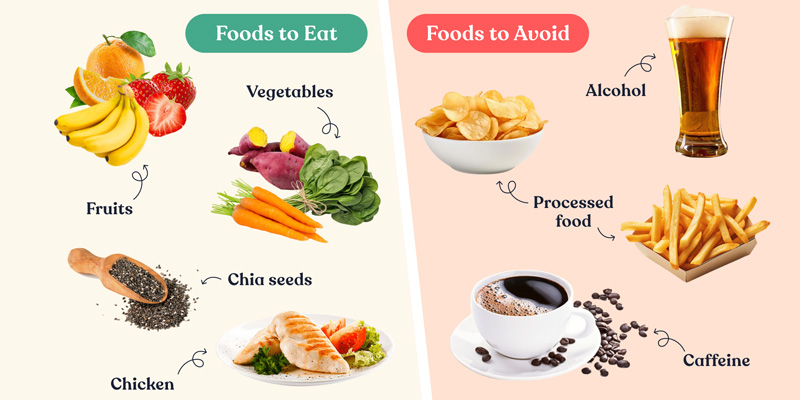
12. Caffeine
Coffee and tea are not prohibited, but keep total caffeine below
200 mg per day from all sources, including coffee, tea,
cola and chocolate.
As a rough guide, this may be about 2 small cups of coffee or 3–4 cups of
regular chai, depending on strength. A large café coffee may contain
100–200+ mg in one serving.
Avoid energy drinks because of their high caffeine and stimulant content.
13. Alcohol — Avoid Completely
There is no established safe amount of alcohol during pregnancy.
Avoid wine, beer, spirits and cocktails throughout pregnancy.
14. Herbal & Ayurvedic Products
Natural does not automatically mean pregnancy-safe.
Herbal or Ayurvedic preparations, detox products and unregulated supplements
may lack adequate safety data or standardisation.
Always check with your doctor before taking herbal or Ayurvedic products during pregnancy.
15. Liver & Excess Vitamin A
Liver is very high in preformed vitamin A (retinol), and excessive amounts
can harm fetal development.
Avoid large amounts of liver, liver preparations and Vitamin A/retinol supplements
unless specifically advised by your doctor.
Beta-carotene from vegetables is different and is not associated with the same toxicity.
16. Unpasteurised / Fresh Juices
The risk is contaminated water, ice or unwashed produce, not the juice itself.
Prefer pasteurised juice or freshly prepared juice from a hygienic source
using washed produce and clean water.
17. Food Left at Room Temperature
In India’s warm climate, bacteria can multiply rapidly in food left out for several hours.
Be cautious with:
- Buffet food
- Dairy or cream-based dishes
- Cooked food left outside for long periods
- Leftovers that have not been stored properly
Refrigerate perishable food promptly and reheat leftovers thoroughly before eating.
18. Deli Meat & Cold Cuts
Salami, ham, cold cuts and other refrigerated ready-to-eat meats can carry Listeria.
If eaten during pregnancy, heat them until steaming hot rather than eating them cold.
19. Raw Eggs in Desserts
Some homemade mousse, mayonnaise, custards and no-bake desserts may contain
raw or undercooked eggs.
Choose products made with pasteurised eggs or ensure that eggs are thoroughly cooked.
20. Spicy Food & Pickles
Spicy food does not cause miscarriage. However, very spicy or oily food may
worsen acidity, reflux, nausea or bloating.
The reason to reduce spicy food may be maternal comfort, not fetal safety.
Pickles are also not forbidden; simply watch salt intake and hygiene.
Foods You DON’T Need to Avoid Just Because You’re Pregnant
21. Can I Eat Soft Cheese During Pregnancy?
Yes — if it is pasteurised and hygienically stored. 🧀
Cream cheese, cottage cheese, mozzarella and paneer are generally safe
when made from pasteurised milk.
⚠️ Be Cautious:
Brie, Camembert and blue or mould-ripened cheeses should be avoided when
eaten cold because of the potential Listeria risk.
💡 Important:
Pregnancy food advice can vary depending on your health, pregnancy stage
and medical history. If you have a high-risk pregnancy or are unsure about
a particular food, consult your Obstetrician or Gynaecologist before making
major dietary changes.