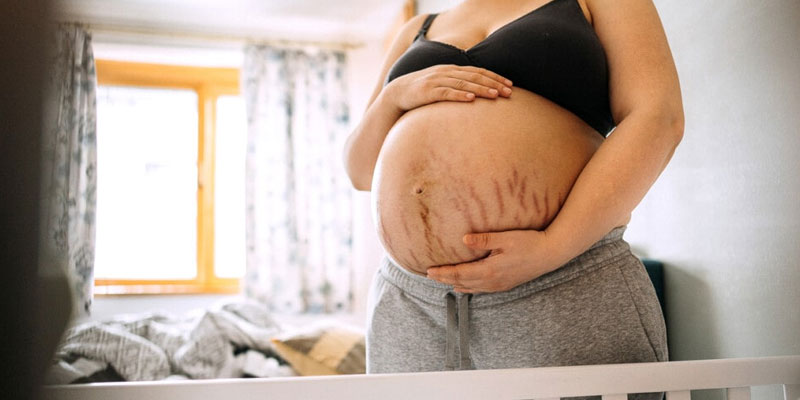
Nearly every pregnant woman wonders — Can I prevent these stretch marks? Will they fade? Do creams actually work?
Well..You’re not alone 😊 Stretch marks are one of the most common concerns in pregnancy. To help you feel more confident, here are clear answers to the questions I hear every day.
1. What exactly are stretch marks?
Stretch marks are lines on the skin that appear when the skin stretches faster than it can grow. During pregnancy, the skin over the belly, breasts, and thighs stretches quickly, causing these marks.
They often start as red or purple lines and gradually fade to skin-coloured or silvery white after delivery.
2. When do they usually appear?
Most women notice them between the 5th–7th month (20–30 weeks) during the 2nd and 3rd trimester. Some may see them earlier if the belly grows fast.
3. Why do stretch marks happen in pregnancy?
Stretch marks develop due to:
- Rapid stretching of the skin
- Hormonal changes that soften skin fibers
- Genetics (if your mother had them, you're more likely too)
They are extremely common and not a sign of any health problem.
4. Can stretch marks be completely prevented?
No cream or oil can guarantee 100% prevention. But good skin care and healthy weight gain can reduce their severity.
5. What can I apply to help reduce or prevent stretch marks?
Moisturising regularly keeps the skin elastic and reduces discomfort.
Safe and commonly recommended options:
- Cocoa butter lotions
- Shea butter creams
- Coconut oil / almond oil
- Hyaluronic acid lotions
Apply twice daily, starting early in pregnancy. (Retinoid creams should be avoided during pregnancy.)
6. Do oils and creams really work?
They mainly help by:
- Keeping the skin hydrated
- Reducing itching
- Improving elasticity
They may not stop stretch marks completely, but they make them less noticeable.
7. Does weight gain affect stretch marks?
Yes. Rapid weight gain increases the chances. Gaining weight steadily and within recommended limits is helpful.
8. Is itching normal?
Mild itching is common as the belly stretches. Moisturizing reduces the discomfort.
Severe itching on palms and soles should be evaluated by your doctor.
9. Will scratching make stretch marks worse?
Scratching doesn’t cause stretch marks but can irritate the skin. Moisturizing reduces the urge to scratch.
10. Do stretch marks fade after delivery?
Yes. Over months, they fade gradually from red/pink/purple to lighter silvery lines. They rarely disappear completely, but they become much less visible.
11. Are treatments available after delivery?
Yes. Once breastfeeding is completed, or with doctor approval:
- Laser therapy
- Microneedling
- Retinoid creams
These can help improve their appearance.
12. Do stretch marks mean something is wrong with pregnancy?
No. Stretch marks are a normal part of pregnancy for many women.
13. Can I get stretch marks even if I am underweight or not gaining much?
Yes. Even with minimal weight gain, genetics and hormones can cause stretch marks.
14. Which areas can get stretch marks?
- Belly
- Breasts
- Thighs
- Hips
- Buttocks
- Arms
15. Are older stretch marks harder to treat?
Yes. Newer red/purple marks respond better to creams. Older white stretch marks may require treatments like lasers for noticeable improvement.
💡 Key Takeaway:
- Stretch marks are normal, common, and harmless.
- Moisturizing, steady weight gain, and good skin care help reduce severity.
- They fade significantly with time.
📍 Source: Dr. Shweta Mehta – DNB, Obstetrics & Gynaecology | United Multispeciality Hospital, Kandivali West, Mumbai.