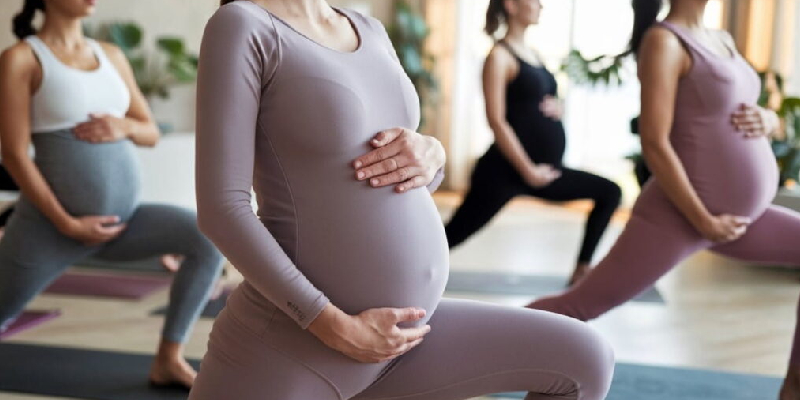
Pregnancy is a beautiful journey, but it also brings physical and emotional changes that can leave many women feeling tired, tense, or unsure about their bodies. Gentle exercise and prenatal yoga offer a safe and effective way to stay strong, flexible, and energized throughout these nine months.
Not only do they help improve posture, reduce back pain, and boost stamina for labor, but they also promote mental calmness, reduce stress, and foster a deeper connection with the growing baby. With the right guidance, movement during pregnancy can be both nurturing and empowering.
Here in this Q&A section, I’ve incorporated the general doubts of soon-to-be mothers regarding the same —
1. Is it safe to exercise during pregnancy?
Yes! In a low-risk pregnancy, 150 minutes/week of moderate exercise is recommended.
It reduces back pain, swelling, excess weight gain, and gestational diabetes, and improves delivery outcomes.
2. Can I start now?
If you weren't active before, start with gentle activities like walking several times a week, with your doctor’s approval.
3. What exercises are safe?
- ✔ Walking
- ✔ Prenatal yoga
- ✔ Stationary cycling
- ✔ Swimming
- ✔ Light strength training
Avoid: contact sports, heavy lifting, lying flat on your back after 20 weeks, high-impact workouts.
4. When should I stop exercising?
Stop immediately and contact your obstetrician if you experience:
- Bleeding
- Dizziness or fainting
- Calf pain or swelling
- Painful contractions
- Leaking fluid
- Shortness of breath at rest
5. Can I exercise with twins?
Yes, but with modifications. Twin pregnancies have a higher chance of preterm contractions, so choose low-impact activities like:
- Walking
- Prenatal stretching
- Swimming
- Pelvic floor strengthening
Avoid vigorous exercise after 28 weeks unless cleared by your obstetrician.
6. Is prenatal yoga safe during pregnancy?
Yes — when done with proper guidance. Prenatal yoga is specifically designed for pregnancy and avoids poses that pressure the abdomen, involve deep twisting, or strain the joints.
Always check with your doctor if you have bleeding, cramps, severe back pain, or a high-risk pregnancy.
7. What are the benefits of yoga during pregnancy?
Prenatal yoga helps by:
- Reducing back, hip, and pelvic pain
- Improving posture and balance
- Reducing stress, anxiety, and insomnia
- Enhancing flexibility of hips and pelvis
- Improving breathing control useful during labour
- Reducing swelling and improving circulation
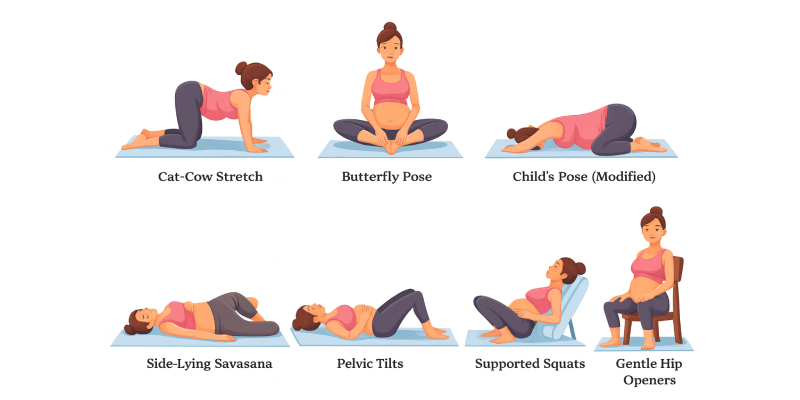
8. Which yoga poses are safe during pregnancy?
Safe options include:
- Cat–cow stretch
- Butterfly pose
- Child’s pose (modified)
- Side-lying savasana
- Pelvic tilts
- Supported squats
- Gentle hip openers
Avoid: deep twists, backbends, lying flat on your back after 20 weeks, upside-down poses, or anything that causes discomfort.
9. When should I avoid yoga?
Skip yoga until cleared by your doctor if you have:
- Placenta previa
- Severe anemia
- Risk of preterm labour
- Uncontrolled high blood pressure
- Vaginal bleeding
- Cervical insufficiency
10. How often should I do prenatal yoga?
Most women benefit from 3–4 sessions per week, 20–40 minutes each.
Even short daily stretching or breathing practices (10 minutes) help reduce stress and improve sleep.
11. Can I start yoga if I have never exercised before?
Absolutely — prenatal yoga is beginner-friendly. Start slow with basic movements, focus on breathing, and avoid pushing yourself.
12. Why is it important to keep exercising after my baby is born?
Exercising postpartum helps improve mood and reduces the risk of deep vein thrombosis (DVT), which is more common in the weeks after childbirth.
It also helps in healthy weight loss and rebuilding strength after delivery.
General Tips
- Stay hydrated before and after exercise.
- Wear comfortable, loose-fitting clothes.
- Warm up and cool down properly.
- Focus on steady breathing and proper posture.
💡 Key Takeaway:
- Exercise and yoga are safe in most pregnancies when done correctly.
- They reduce pain, stress, swelling, and improve stamina for labour.
- Always stop if you notice warning signs and consult your doctor.
📍 Source: Dr. Shweta Mehta – DNB, Obstetrics & Gynaecology | United Multispeciality Hospital, Kandivali West, Mumbai.