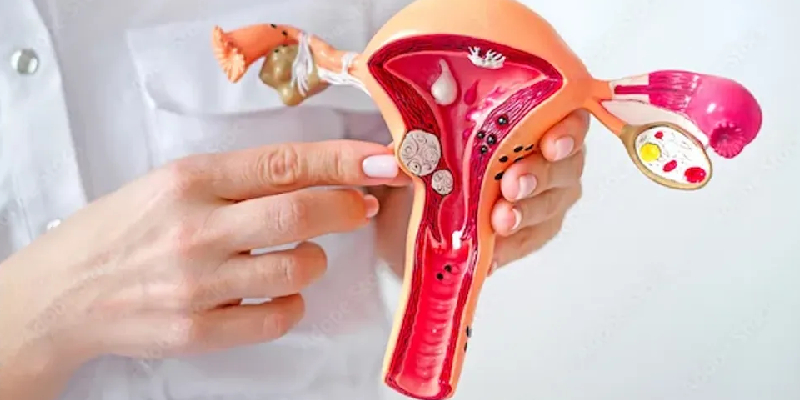
Finding out that you have a polyp in the uterus can be stressful, especially if you are planning a pregnancy or struggling to conceive. The reassuring fact is that most uterine polyps are non-cancerous and easily treatable.
Let’s understand what uterine polyps are and how they may affect fertility.
What Is a Uterine (Endometrial) Polyp?
A uterine polyp is a small growth from the inner lining of the uterus (endometrium). It may be:
- Single or multiple
- Small (few millimetres) or larger
- Attached by a thin stalk or a broad base
Most polyps are benign, especially in reproductive-age women.
(About 1–5% may be cancerous or precancerous — risk increases after menopause.)
What Causes Uterine Polyps?
They develop due to hormonal stimulation, especially estrogen.
Common in women with:
- Irregular cycles
- PCOS
- Overweight or obesity
- Hormonal therapy
- Ages 30–40+
What Are the Symptoms?
Some women have no symptoms. Others may notice:
- Heavy or prolonged periods
- Spotting between cycles
- Irregular bleeding
- Difficulty conceiving
Does a Uterine Polyp Affect Fertility?
Yes — sometimes.
Polyps may:
- Interfere with embryo implantation
- Cause inflammation inside the uterus
- Act like a foreign body
- Affect blood flow to the lining
The effect depends on size, number and location.
Can You Get Pregnant With a Polyp?
Yes. Many women do conceive even with small polyps.
But chances may reduce if polyps are:
- Large
- Multiple
- Blocking the tube opening or implantation site
Does Removing a Polyp Improve Fertility?
Yes. Studies show higher conception rates after removal — especially in unexplained infertility or repeated IVF failure.
Removal is advised if:
- You are trying to conceive
- You have abnormal bleeding
- The polyp is large or multiple
How Is a Uterine Polyp Diagnosed?
- Ultrasound (TVS)
- Saline Infusion Sonography (SIS)
- Hysteroscopy — gold standard
Hysteroscopy allows direct visualisation.
How Are Polyps Treated?
Hysteroscopic Polypectomy is the best treatment.
- Day-care procedure
- No cuts or stitches
- Short anaesthesia
- Quick recovery
The removed polyp is sent for biopsy to confirm it is benign.
When Should You See a Doctor?
- Difficulty conceiving
- Repeated miscarriage or IVF failure
- Irregular or heavy bleeding
- Spotting between periods
Early evaluation prevents delays.
Can Polyps Come Back?
Yes. Recurrence is possible — especially with hormonal imbalance.
Regular follow-up helps.
Key Takeaway
A uterine polyp can affect fertility — but it is one of the most easily correctable causes.
Timely diagnosis and treatment often lead to better pregnancy outcomes.
A Reassuring Message
Having a uterine polyp does not mean you cannot conceive.
With proper evaluation and treatment, many women go on to have healthy pregnancies.
📍 Source: Dr. Shweta Mehta — DNB Obstetrics & Gynaecology | United Multispeciality Hospital, Kandivali West, Mumbai