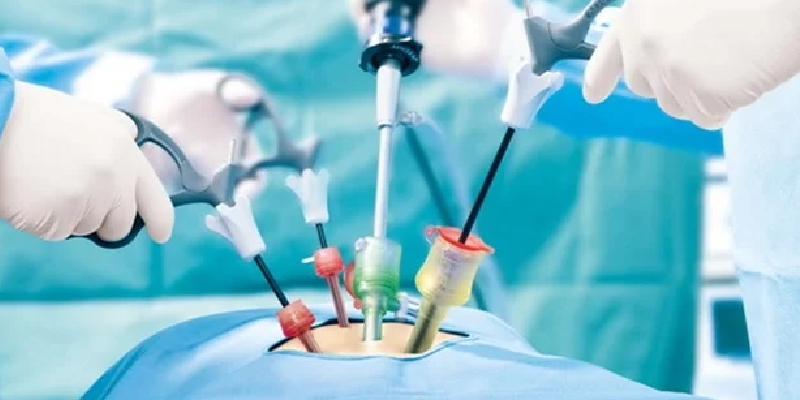
Ovarian cysts are very common, and most are harmless. But sometimes they cause pain, hormonal changes, or fertility problems. Laparoscopy (keyhole surgery) is the most effective and safest way to treat cysts that need removal.
This guide explains when surgery is needed, how it helps, and what patients can expect.
⭐ What Is an Ovarian Cyst?
An ovarian cyst is a fluid-filled sac that develops on or inside the ovary.
Most cysts are harmless and often disappear on their own, but some can cause pain, hormonal problems, or fertility issues.
⭐ Do All Ovarian Cysts Need Surgery?
No. Many cysts simply need monitoring with scans.
Surgery is advised only if the cyst is large, painful, persistent, or suspicious.
⭐ When Is Laparoscopic Surgery Needed?
1️⃣ Large cyst (usually >5–6 cm)
Large cysts don’t shrink easily and may twist (torsion), which can become an emergency.
2️⃣ Severe or persistent pain
Pain may be due to:
- Torsion (twisting)
- Rupture
- Pressure on nearby organs
3️⃣ Cyst not resolving after 2–3 months
Functional cysts usually resolve, but persistent ones need further evaluation.
4️⃣ Suspicious appearance on ultrasound
Features that suggest surgery:
- Solid areas
- Multiple septations
- Rapid growth
- Increased blood flow
- Very painful cysts
5️⃣ Dermoid cyst (mature teratoma)
These do not disappear on their own and must be removed surgically.
6️⃣ Endometriotic cyst (chocolate cyst)
Surgery may be needed if the cyst is:
- Causing pain
- Affecting fertility
- 4–5 cm or larger
- Interfering with IVF plans
7️⃣ Family history or concern for malignancy
Removal and biopsy may be advised for safety.
⭐ Why Is Laparoscopy Preferred Over Open Surgery?
Laparoscopy is “keyhole surgery” done through 3–4 tiny cuts.
Benefits include:
- Very small scars
- Less pain
- Minimal blood loss
- Faster recovery
- Hospital stay of 24–48 hours
- Quicker return to routine life
Most ovarian cyst surgeries today are done laparoscopically unless the cyst is extremely large or cancer is suspected.
⭐ What Happens During Laparoscopic Cyst Removal?
- General anaesthesia is given
- Small cuts (5–10 mm) are made on the abdomen
- The cyst is carefully separated from the ovary
- The ovary is preserved whenever possible
- The cyst is removed in a protective bag to prevent spillage
- Most patients go home the next day
⭐ Will My Ovary Be Removed?
No — not in most cases.
Laparoscopy aims to preserve the ovary, especially in young women and those planning pregnancy.
Only very suspicious or severely damaged ovaries may need removal.
⭐ Recovery After Laparoscopic Cyst Removal
Most women can:
- Walk the same day
- Eat normally within hours
- Return to routine work in 5–7 days
- Resume exercise in 3–4 weeks
- Try for pregnancy after 1–2 cycles (if applicable)
⭐ Other Frequently Asked Questions
What are the risks, and how are they managed?
Laparoscopic cyst removal is very safe. Possible risks include:
- Bleeding – usually minimal and controlled
- Infection – prevented with antibiotics
- Injury to nearby organs – very rare
- Cyst rupture – prevented by protective bag
- Conversion to open surgery – rare, for safety
- Recurrence – possible in endometriosis
Are there non-surgical options?
- Observation with repeat scans
- Pain medications
- Hormonal pills to prevent new cysts
- Lifestyle management for PCOS-related cysts
These options do not remove an existing cyst but may help prevent new ones.
Should parents worry if a child has an ovarian cyst?
Most cysts in children and teenagers are harmless and resolve on their own.
Seek help if there is severe pain, vomiting, a very large cyst, or a complex ultrasound report.
Is laparoscopy safe for fertility?
Yes. Removing cysts like endometriomas or dermoids can actually improve fertility.
Can cysts come back after surgery?
Yes, especially endometriotic cysts. Regular follow-up is important.
Does cyst removal affect periods?
Periods may be irregular for 1–2 months, then usually normalize.
When Should You See a Doctor?
- Persistent lower abdominal pain
- Bloating or pressure sensation
- Painful intercourse
- Irregular periods
- Sudden sharp pain (possible torsion)
- Cyst detected on scan
💡 Final Takeaway:
- Not all ovarian cysts need surgery.
- When required, laparoscopic removal is safe and fertility-preserving.
- Most women recover quickly and return to normal life within a week.
📍 Source: Dr. Shweta Mehta – DNB, Obstetrics & Gynaecology | United Multispeciality Hospital, Kandivali West, Mumbai.