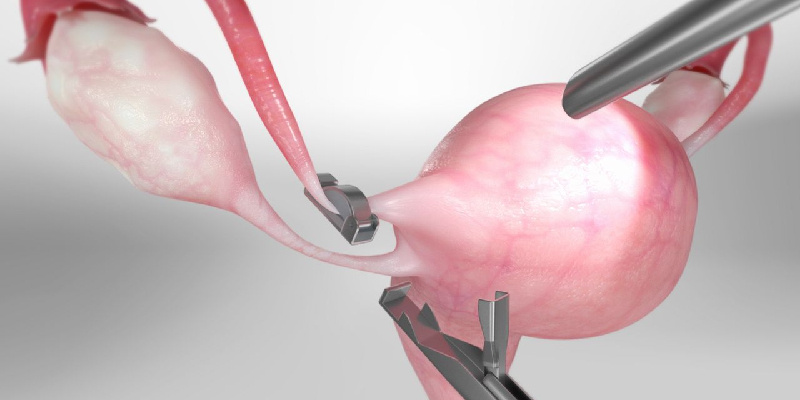
Laparoscopic tubal ligation is a popular permanent method of birth control for women. If
you’re considering it, these simple questions and answers will help you understand what to
expect.
1. What is laparoscopic tubal ligation?
It is a simple keyhole surgery where a doctor closes or blocks the fallopian tubes.
Once the tubes are blocked, sperm cannot meet the egg, so pregnancy cannot happen.
2. How is the surgery done?
The doctor makes 2-3 very small cuts on the stomach (0.5-1cm)
A tiny camera is inserted, and the tubes are sealed using clips, rings, or cautery (heat).
No big stitches are needed.
3. Is it permanent?
Yes. It is considered a permanent method of contraception.
Reversal is difficult, expensive, and not always successful (although possible) — choose it
only if you are sure your family is complete.
4. Will it affect my hormones or periods?
No
Your ovaries and uterus work normally.
Your hormones and periods stay the same.
5. Is the surgery painful?
Most women feel only mild discomfort after the procedure.
Pain is usually limited to:
- Mild abdominal ache
- Shoulder-tip pain (from the gas used during laparoscopy)
This settles within 24–48 hours.
6. How long does the procedure take?
Usually 15–30 minutes
7. Do I need to stay in the hospital?
Most women go home the same day or by the next morning.
8. When can I get back to normal activities?
- Light activities: Next day
- Work: 2–3 days
- Heavy work/exercise: 1 week
9. When can I resume intercourse?
Usually after 1–2 weeks, once the stitches heal and you feel comfortable
10. What is the success rate?
Very high — more than 99% effective.
However, no method is 100% perfect.
11. Is pregnancy possible after tubal ligation?
Very very rare, but if pregnancy does happen, it is more likely to be ectopic (outside the
uterus).
So If you miss your period, take a test and see your doctor.
12. What are the risks of laparoscopic tubal ligation?
Risks are low but may include:
- Infection
- Bleeding
- Injury to nearby organs (rare)
- Failure of the method (very rare)
Your doctor will discuss these before the procedure.
13. Is the procedure safe if I have medical conditions?
Conditions like thyroid issues, blood pressure, or diabetes are usually not a problem, as long
as they are well controlled.
Your doctor will do a pre-op checkup.
14. Do I need contraception after the surgery?
Usually no, but your doctor may advise precaution for 1 week depending on the technique
used.
15. What symptoms after surgery should make me call the doctor?
Seek help if you have:
- Fever
- Persistent vomiting
- Increasing abdominal pain
- Redness or discharge from stitches
- Heavy bleeding
Many women (and their family members) have doubts, fears, and myths passed down
through generations.
Here are clear, simple answers to help you make an informed decision.
📍 Source: Dr. Shweta Mehta – DNB, Obstetrics & Gynaecology | United Multispeciality Hospital, Kandivali West, Mumbai.