🌸 Understanding Hysteroscopy: A Patient Guide
A simple Q&A to help you feel informed and relaxed.
Hysteroscopy is a very common and safe procedure used to look inside the uterus.
Many women feel anxious when they first hear the word, so this guide explains everything
in an easy, reassuring way.
❓ Frequently Asked Questions
1. What is a hysteroscopy?
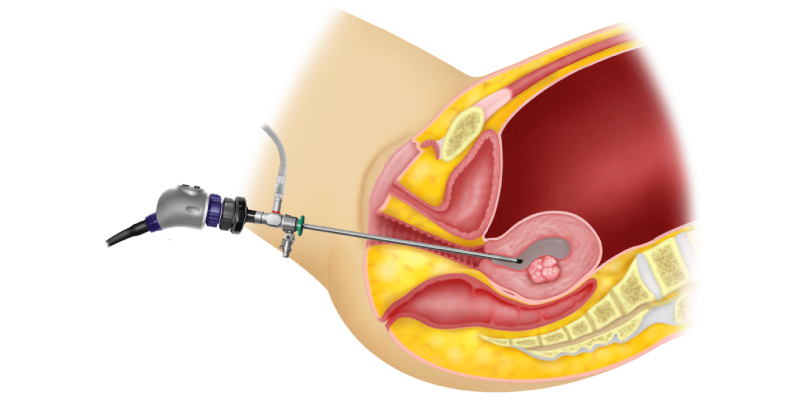
Hysteroscopy is a procedure where a thin tube with a tiny camera (a hysteroscope)
is gently passed through the vagina and cervix into the uterus.
No cuts, no stitches.
2. Why is it done?
Your doctor may advise a hysteroscopy for:
- Heavy or irregular bleeding
- Bleeding after menopause
- Suspected polyps or fibroids
- Difficulty getting pregnant
- Repeated miscarriages
- Removal of a stuck IUD
- Checking the shape of the uterus
It helps in both diagnosing and treating problems.
3. Is hysteroscopy painful?
Most women tolerate it well.
- Office hysteroscopy: Mild cramping, like period pain. Done without anesthesia or with mild local anesthesia.
- Hysteroscopy under anesthesia: No pain during the procedure.
Your doctor will decide what's best for you.
4. How long does the procedure take?
Usually 5–15 minutes.
If treatment (like removing a polyp) is needed, it may take up to 30 minutes.
5. Do I need anesthesia?
Not always. It depends on:
- Your pain tolerance
- The reason for the hysteroscopy
- Whether treatment/biopsy is planned
Office hysteroscopy is usually done without general anesthesia.
6. What happens during the hysteroscopy?
- You lie on the examination table
- A speculum is inserted (like during a Pap smear)
- The small camera is gently passed through the cervix
- Saline may be used to expand the cavity for clearer viewing
- The doctor looks inside the uterus and treats any issues if needed
It is usually quick and very safe.
7. Will I bleed after the procedure?
Light spotting for 1–2 days is normal. Heavy bleeding is uncommon.
8. What can be treated during hysteroscopy?
In the same sitting, doctors can:
- Remove polyps
- Remove small fibroids inside the cavity
- Remove adhesions (scar tissue)
- Correct a uterine septum
- Remove retained products
- Remove a stuck IUD
This avoids separate surgeries.
9. How should I prepare for a hysteroscopy?
- Eat light if asked to be nil by mouth
- Avoid intercourse for 24 hours before
- Inform your doctor if you could be pregnant
- Bring your reports/ultrasound
10. How long is the recovery?
Most women go home the same day and resume work by the next day.
Mild cramps or spotting are common.
Avoid for 3–5 days:
- Intercourse
- Tampons
- Heavy exercise for 24 hours
11. Is it safe?
Yes. Complications are rare, especially when done by trained specialists.
It is one of the safest gynaecological procedures.
12. When should I call my doctor after hysteroscopy?
If you experience:
- Heavy bleeding
- Severe pain
- Foul discharge
- Fever
These are uncommon but should be reviewed.
13. Does hysteroscopy help with pregnancy issues?
Yes. It can diagnose and correct problems that affect fertility such as polyps, adhesions,
septum, and cavity abnormalities.
Many women conceive more easily after treatment.
🌸 Final Word
Hysteroscopy is a safe, quick, and extremely useful procedure to diagnose and treat problems
inside the uterus.
It requires no cuts, minimal discomfort, and very little downtime.
Understanding the procedure can reduce fear and help you feel confident and prepared.
📍 Source: Dr. Shweta Mehta – DNB, Obstetrics & Gynaecology | United Multispeciality Hospital, Kandivali West, Mumbai.